Going Back: What Happens When You Replay the Dragon Quest That Started Everything for You
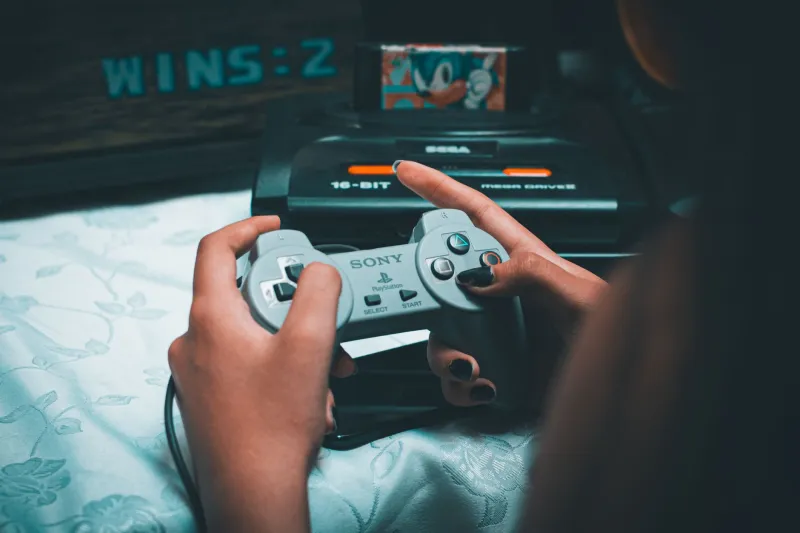
At some point, almost every Dragon Quest fan does it. Maybe it's a new port, maybe it's a slow weekend, maybe it's just a mood — but you fire up the entry that first got you, the one you remember fondly through a decade or two of distance, and you start walking around that familiar world again.
And then something slightly uncomfortable happens. The thing you remembered as vast feels contained. The story you remembered as epic moves faster than you expected. The grinding you remember as satisfying feels, somewhere around the third hour, kind of mechanical. You're having a good time, but it's a different good time than the one you came back for.
This experience is almost universal among long-term Dragon Quest fans, and it's worth sitting with rather than just shrugging off. What's actually happening when we replay our first Dragon Quest — and what does it tell us about how we relate to the series now?
Memory Is a Terrible Save File
The first thing to understand is that you were never really playing the game you remember. You were playing a version of it filtered through the specific circumstances of your life at the time — your age, your gaming experience, how much free time you had, whether you had friends to talk about it with. That version of the game doesn't exist on any cartridge or download. It lived in a specific window of your life and it closed when that window did.
This isn't a sad thing, even if it sounds like one. It's actually a feature of how meaningful experiences work. The Dragon Quest that hooked you at age ten or fifteen or twenty was doing something real — it was meeting you exactly where you were. The gap between that memory and the game you're playing now is a measurement of how much you've changed, not evidence that the game was somehow lying to you.
But knowing that doesn't always make the replay feel less disorienting.
The Difficulty Reckoning
One of the most common replay experiences Dragon Quest fans report is a complete recalibration of difficulty. Games that felt genuinely challenging the first time through — where certain bosses represented real walls that took multiple attempts — often feel much more manageable on a return visit. And the grinding that once felt like a natural part of the rhythm can start to feel like padding.
Part of this is pure experience. You understand JRPG mechanics now in a way you probably didn't during your first playthrough. You know to keep your MP reserves healthier, you understand when to flee and when to push, you have an intuition for resource management that took years of other games to build. The difficulty hasn't changed; you have.
But there's also something else at work. The tension of not knowing what comes next is a huge part of what made those early playthroughs feel high-stakes. When you don't know that the dungeon ends in three more floors, every random encounter carries weight. When you don't know if the boss is beatable with your current party, the preparation feels meaningful. On a replay, that uncertainty is gone, and the difficulty often goes with it.
The Story Hits Differently (In Both Directions)
Here's where it gets interesting. Almost every Dragon Quest fan who goes back to an older entry reports that certain story beats land harder than they did the first time — and others land softer.
The softer ones are usually the ones that relied on novelty. Twists that felt shocking at age twelve are just plot mechanics now. Character introductions that felt electric when you didn't know who anyone was feel like setup rather than arrival. The series' signature tonal whiplash — that ability to go from goofy pun-filled banter to genuine emotional weight in the span of one scene — requires a certain kind of surprise to work at full power.
But the beats that hold up, or even improve with age, are usually the quieter ones. Dragon Quest V's marriage sequence, for example, hits players differently at thirty than it did at fifteen, because the emotional stakes of family, loss, and time have become real in ways they weren't before. Dragon Quest IV's chapter structure — which felt slow and disconnected to many players on first run — often reads as genuinely elegant on a replay, when you can see the full shape of what it's doing.
The series has always been more emotionally sophisticated than its cheerful presentation suggests. Replays have a way of making that visible.
What the Newer Games Took Away (And What They Gave Back)
Replaying an older Dragon Quest entry also inevitably becomes a comparison exercise, whether you mean it to or not. Dragon Quest XI is a masterpiece by most measures, but going back to Dragon Quest III or Dragon Quest V after playing it reveals trade-offs that the series made along the way.
The older games have a kind of structural openness that the newer ones traded for narrative focus. Dragon Quest III in particular gives you a party you build yourself, a world that largely lets you navigate at your own pace, and a story that trusts you to fill in the emotional gaps. Dragon Quest XI gives you more — more story, more characters, more content — but it also makes more decisions for you. Neither approach is wrong. They're just different relationships with the player.
Players who grew up with the older games sometimes find that returning to them scratches an itch that the newer entries, for all their quality, can't quite reach. There's a particular feeling of authorship in Dragon Quest III — this was my party, my adventure — that Dragon Quest XI, with its fixed cast and authored relationships, doesn't replicate.
The Thing Worth Holding Onto
Here's what most Dragon Quest veterans eventually arrive at after a replay: the game you loved wasn't just the game. It was you and the game together, at a specific moment. That version is gone, and that's okay.
What you get on a replay is something different but genuinely valuable — a chance to see the craft underneath the experience, to appreciate what the designers were doing without the fog of discovery, and to understand why this series got its hooks into you in the first place. The Dragon Quest that started everything for you was a good game. It still is. It's just yours in a different way now.