Stop Skipping the Cauldron: How Dragon Quest's Crafting Systems Change Everything
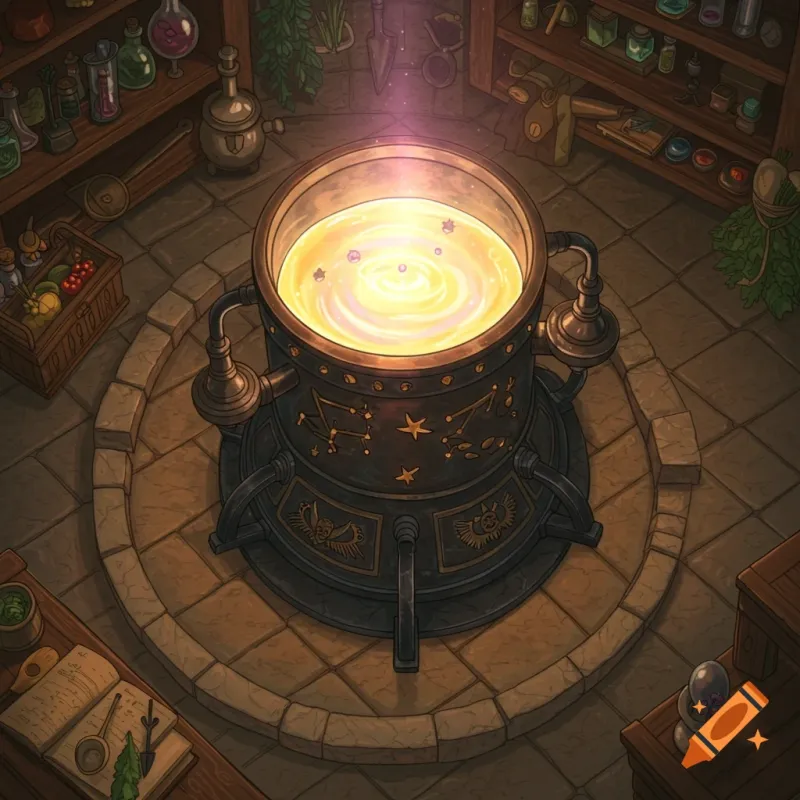
Photo: fantasy RPG crafting cauldron alchemy medieval game, via media.craiyon.com
Let's be honest. The first time you booted up a Dragon Quest game and spotted a crafting menu, you probably thought, "I'll get to that later." Then you didn't. You sold your extra ingredients, bought a sword from the shop like a sensible person, and moved on. No judgment — most of us did the same thing. But here's the thing: that cauldron you ignored? It was quietly holding some of the best gear in the game.
Dragon Quest's alchemy and crafting systems have been a part of the franchise for over two decades, and they've evolved in some genuinely clever ways. Understanding how they work — and why they exist — can completely change how you experience these games.
A Brief History of Mixing Things Together
Crafting didn't show up in Dragon Quest overnight. The series spent its early years as a fairly traditional RPG where you found gear in chests or bought it from merchants. That changed in a big way with Dragon Quest VIII: Journey of the Cursed King, which introduced the Alchemy Pot system to Western audiences when it launched in North America in 2005.
The concept was deceptively simple: combine two or three items in a pot, wait a few steps (or in the PS2 version, actual real-world time), and receive something new. A Plain Clothes plus a Plain Cheese equaled a Leather Armor. It sounded like a novelty, but the rabbit hole went deep. The game shipped with over 100 recipes, and many of the strongest weapons and accessories in the entire playthrough were locked behind the cauldron.
Dragon Quest IX took things further by removing the wait time entirely and letting you craft on the fly in a dungeon. Then Dragon Quest XI: Echoes of an Elusive Age introduced the Fun-Size Forge — a mini-game where you physically hammer out gear at campsites, with optional challenges to improve the item's stats. It turned crafting into something tactile and satisfying rather than a background process you forgot about.
Each iteration has kept the core idea intact: the best stuff isn't always for sale. You have to make it.
Why Crafting Feels So Good (Even When You're Not Sure Why)
There's a reason crafting mechanics have spread through basically every major RPG genre. It taps into something psychologists call the IKEA effect — we place higher value on things we help create, even partially. When you forge a piece of equipment through Dragon Quest's systems, it feels earned in a way that simply buying it from a shop doesn't.
Beyond the emotional angle, crafting also gives players agency over their power curve. Dragon Quest games are famously balanced around grinding, but a well-timed crafted weapon can let you skip hours of level-building. That's a meaningful choice the game hands you, and it rewards players who pay attention to their inventory.
There's also a discovery element that fits perfectly with Dragon Quest's adventurous spirit. Stumbling onto a recipe — either through experimentation or a helpful NPC hint — and watching it produce something unexpected scratches the same itch as finding a secret room or unlocking a hidden boss.
The Items Worth Crafting (And When to Start)
If you're playing Dragon Quest VIII, start paying attention to the Alchemy Pot as soon as you get it. Don't wait until you're halfway through the game with a backpack full of items you've been hoarding "just in case." Some early-game recipes produce gear that's significantly better than what you can buy at that point in the story, especially for Jessica's whip and Angelo's bow.
In Dragon Quest XI, the Fun-Size Forge becomes essential around the midgame. Recipes you find in sparkly spots and bookshelves across the world often produce weapons and armor that outclass anything in the shops for several story chapters. The Catholicon Ring, which provides immunity to multiple status effects, is a crafted item — and if you've ever lost a boss fight because your whole party got put to sleep, you understand exactly why that matters.
For Dragon Quest IX, the crafting system rewards completionists especially. The Grotto dungeons that make up most of the endgame drop materials you can use to forge top-tier gear, giving the whole system a satisfying loop: explore, collect, craft, get stronger, explore harder dungeons.
Tips for US Players Just Starting Out
If you're new to the series, here are a few practical things that'll save you a lot of headaches:
Don't sell everything. This is the big one. Items that look like vendor trash — a Plain Cheese, a Leather Whip, a Seed of Agility — might be crafting components you'll desperately want later. Early in the game, hold onto duplicates of anything you haven't identified a use for yet.
Check the recipe list early and often. Dragon Quest VIII includes an alchemy guide in the menu. Dragon Quest XI lets you preview recipes you've discovered. Glancing at these regularly gives you a shopping list for what to keep versus what to sell.
Experiment without guilt. Some recipes are discoverable through trial and error, and the cost of a failed experiment is usually pretty low. If you've got three of something, try combining two of them and see what happens.
Upgrade, don't replace. One of the smartest things crafting allows in Dragon Quest XI is upgrading existing gear rather than swapping it out entirely. A weapon you crafted at Level 5 can often be improved at the forge later, which means your investments don't become obsolete as quickly.
The Bigger Picture
Dragon Quest's crafting systems don't get nearly as much attention as the series' combat, story, or monster designs — and that's a shame. They represent one of the smartest ways these games reward curiosity and preparation. The players who take the time to learn a game's crafting language are often the ones who sail through content that stumps everyone else.
So next time you're setting up camp in Heliodor's wilderness or stirring that old alchemy pot on the back of Yangus's wagon, don't skip past it. There's a better sword in there. You just have to make it.